
Circadian Rhythm
Tracing the Body's Internal Clock Across a Working Week
A close reading of how irregular schedules and light exposure alter the circadian signal.
Field notes on how screen-free evenings, light management, and consistent wind-down practices shape the quality of deep sleep stages across a twelve-week observational period.
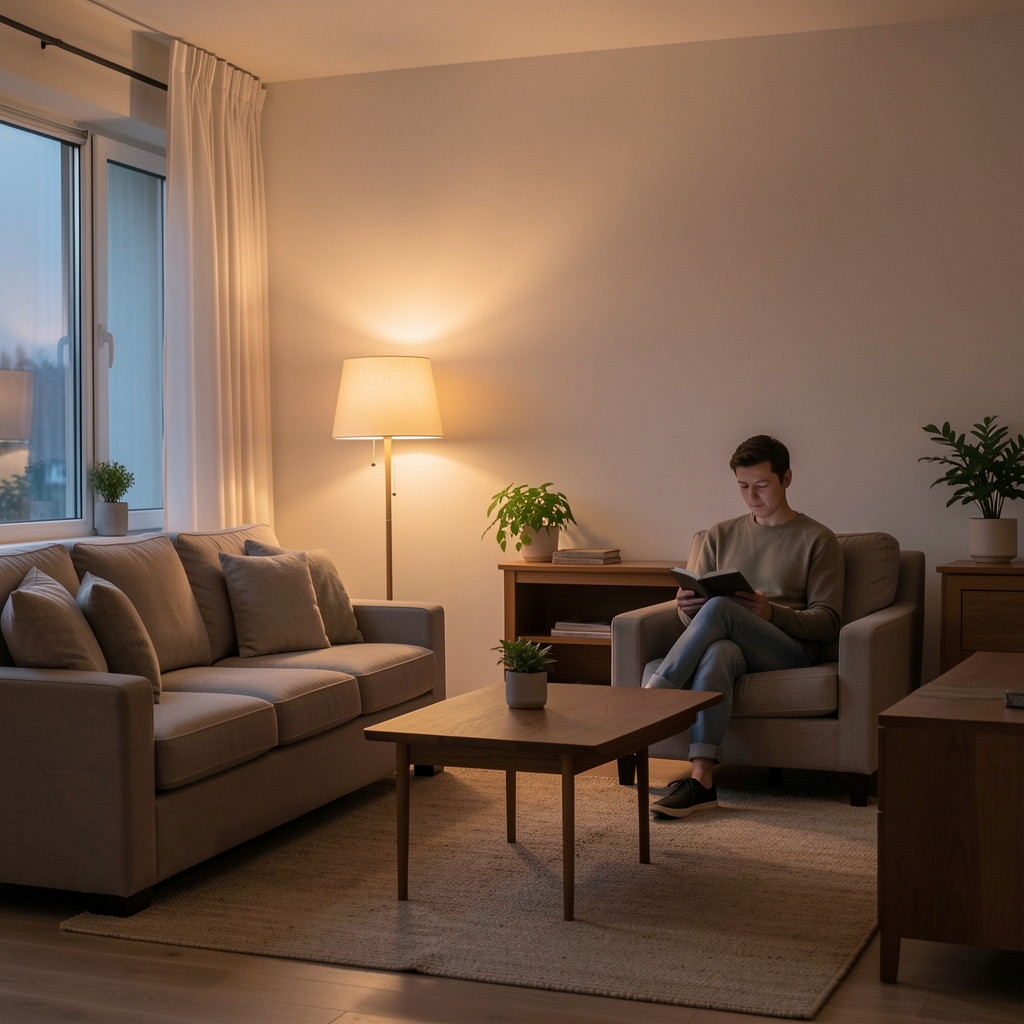
Fig. 01 — Evening wind-down environment. Observational study, London, February 2026.
The two hours before sleep are rarely regarded as part of the sleep process itself. They are understood as the remaining hours of the day — time to be used, filled, or recovered from. What the sleep research literature suggests, with considerable consistency, is that those two hours are in fact among the most consequential for what happens in the hours that follow.
The transition from wakefulness to sleep is not instantaneous. It is a gradual biological process — one that benefits from conditions that support rather than obstruct it. Core body temperature needs to fall by approximately one degree Celsius for sleep onset to occur efficiently. The primary evening signal — the gradual rise of melatonin — typically begins two to three hours before habitual sleep time in adults operating under a stable circadian schedule, but is highly sensitive to environmental light.
The concept of sleep pressure — the accumulating drive to sleep that builds across wakefulness — is also relevant here. Sleep pressure is regulated by adenosine, a neuromodulator that accumulates in the brain during waking hours and is cleared during sleep. In the evening, the interplay between rising adenosine (sleep pressure) and the circadian alerting signal produces the characteristic dip in alertness that most adults notice in the late evening. The evening wind-down period, at its most effective, is the period during which this natural transition is allowed to proceed without disruption.
The twelve-week observational period documented in this entry ran from October through December 2025, coinciding with the darkening of the English autumn and winter — a period when natural circadian anchoring from daylight is already reduced, making the effect of artificial evening light correspondingly more significant.
Participants in the observation maintained detailed sleep journals, noting screen usage timing, lighting conditions in the hour before bed, sleep onset estimates, and morning energy ratings. The observations were structured rather than controlled — this is a journal of field notes, not a randomised trial — but the patterns that emerged were consistent enough to warrant documentation.
Among participants who eliminated screen use (phones, laptops, televisions) for at least sixty minutes before intended sleep time, self-reported sleep onset was consistently noted as faster, and morning energy ratings were higher on subsequent mornings. Participants who maintained screen use until within thirty minutes of bed consistently noted longer perceived sleep onset times and more frequent waking in the first sleep cycle.
"The evening does not wait to be designated a preparation period. It becomes one whether the body is given permission or not — the question is only whether the preparation is supported or interrupted."
— Eleanor Whitfield, observational notes, October 2025
The effect of artificial light on melatonin suppression has been documented across multiple research groups and is now well-established. The critical variables are spectrum (shorter wavelengths — blue light — produce greater suppression), intensity (higher lux levels produce greater suppression), and timing (earlier in the evening, suppression is more consequential for overall timing).
A 2014 study published in the Proceedings of the National Academy of Sciences by Chang and colleagues directly compared e-reader use in the evening with printed book reading. The e-reader condition produced suppressed melatonin levels, delayed melatonin onset, reduced alertness the following morning, and reduced proportion of REM sleep — all from an average of four hours of e-reader use per evening across five evenings. The printed book condition produced none of these effects.
Amber-spectrum lighting — produced by incandescent bulbs, candles, or specifically designed warm-white LEDs — has been tested in several small studies as an alternative evening light source. The research is less extensive than for blue light suppression, but the general finding is that switching to low-intensity amber-spectrum light in the two hours before sleep is associated with less melatonin suppression than standard white LED illumination at comparable brightness.
Human sleep architecture follows a predictable structure across the night, organised into approximately 90-minute cycles. Each cycle moves through lighter non-REM stages into slow-wave sleep (SWS) — sometimes called deep sleep or N3 — and then into REM. The proportion of these stages is not uniform across the night: slow-wave sleep dominates the first half of the night, while REM sleep is more prevalent in the second half, particularly in the final two cycles before waking.
Slow-wave sleep is the stage most associated with physical restoration. Growth processes, immune function support, and the consolidation of procedural memory all occur preferentially during SWS. The amount of SWS obtained is regulated partly by prior sleep deprivation (more deprivation produces more SWS in the subsequent sleep period) and partly by the quality of sleep onset — delayed sleep onset from a disrupted evening wind-down compresses the slow-wave opportunity available in the first half of the night.
REM sleep, which predominates in the later portion of the night, is associated with emotional memory processing, creative problem-solving, and — relevant to the broader theme of this journal — with the regulation of appetite-related cognitive processes. Shortened or disrupted REM sleep has been linked in multiple studies to increased hedonic appetite (the drive to eat for reward rather than energy need) the following day.
Among the environmental factors noted in the observational period, weighted blankets attracted particular attention from participants. The research base for weighted blankets is more limited than for light management, but several peer-reviewed studies have examined their effect on sleep quality in non-specialist populations.
A 2020 study published in the Journal of specialist Sleep wellness practice by Ekholm and colleagues examined 120 adults with insomnia and found that those using weighted blankets reported significantly improved sleep quality, reduced night-time awakenings, and improved daytime alertness compared to control after four weeks. The proposed mechanism involves deep-pressure stimulation, which research on tactile stimulation suggests activates the autonomic nervous system in a way that reduces physiological arousal — a state conducive to sleep onset.
Participants in the Telova Field Notes observational period who introduced a weighted blanket as part of their wind-down environment reported subjectively faster sleep onset and reduced restlessness during the first sleep cycle. These are observational notes, not controlled measurements, but the consistency across participants over multiple weeks is worth documenting.
Perhaps the most persistent observation across the twelve-week period was one that is difficult to quantify but easy to recognise: the value of consistency and predictability in the evening wind-down sequence. Participants who developed a reliable sequence of evening activities — in approximately the same order, at approximately the same time each night — reported the transition to sleep as easier and less effortful than those with highly variable evenings, even when the total pre-sleep period was comparable.
The sleep research literature provides a framework for understanding this. Conditional arousal — the association of the bedroom environment with alertness rather than sleep — is a well-documented phenomenon in the study of poor sleep. Its counterpart, the development of sleep-conducive associations through repetitive pre-sleep rituals, has been used as a component of behavioural sleep approaches for decades.
The ritual need not be elaborate. The Telova Field Notes observations found that a three-step sequence — dimming lights, a brief period of non-stimulating reading or journaling, and a consistent bed preparation sequence — was sufficient to produce the association effect when maintained for more than two weeks. The specifics mattered less than the regularity.

Eleanor Whitfield is the primary editor of Telova Field Notes. Her writing draws on a background in science journalism and a sustained interest in the intersection of rest, daily structure, and long-term wellbeing. She has contributed research summaries and field observations to the journal since its founding.
A close reading of how irregular schedules and light exposure alter the circadian signal.

An editorial inquiry into overnight metabolism and how sleep quality intersects with body weight over time.